New olive oil in Tuscia: inside the mills, how to taste it, the two PDO oils of Viterbo and the mid-November festivals. One hour from Rome.
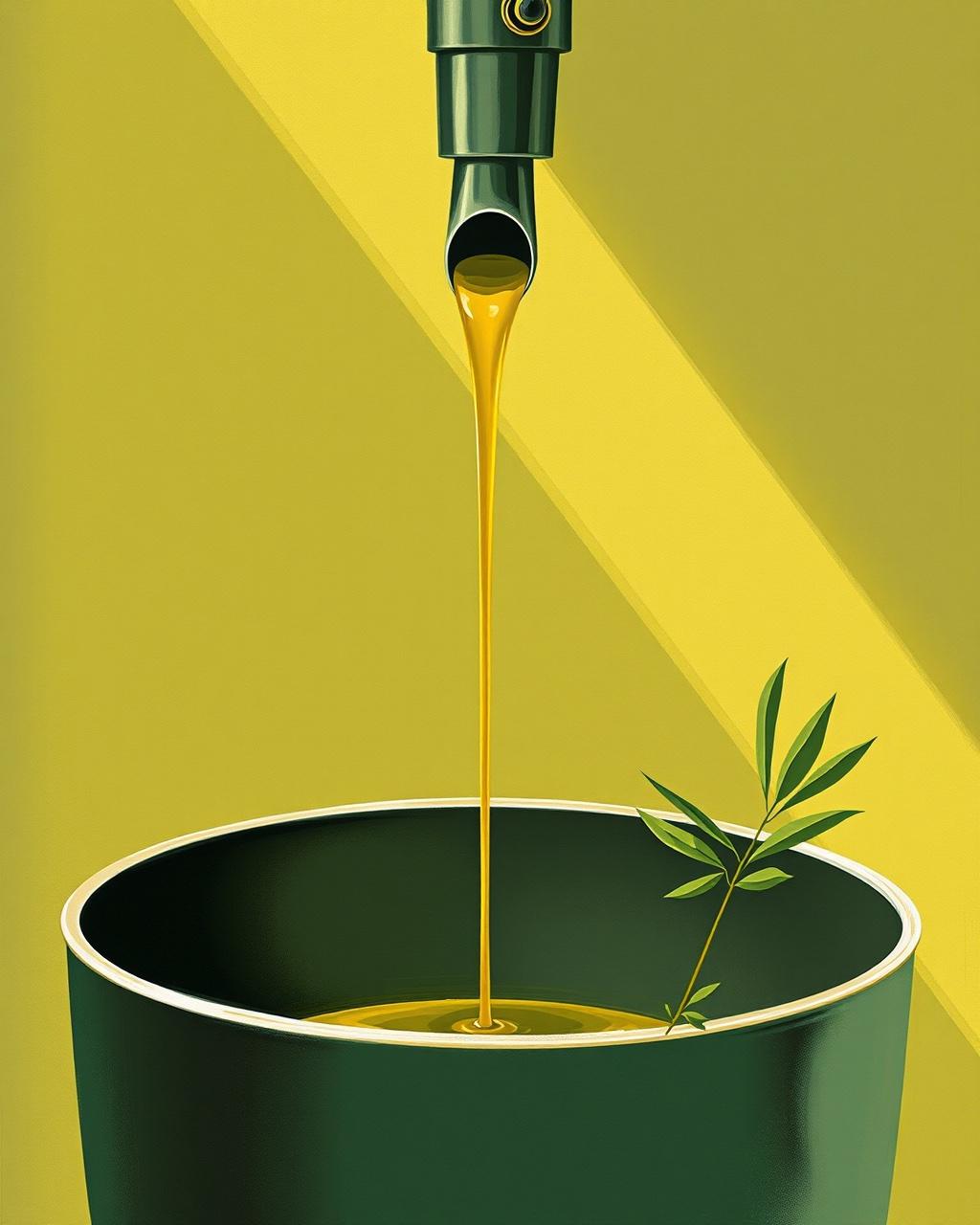
In November, in the villages of Tuscia, there is a smell you could recognise with your eyes closed. It drifts out of the olive mills, where olives picked in the morning have become oil by the evening. This is the month of the pressing, and of new oil: green, thick, a little cloudy, with a peppery catch at the back of the throat. Here it isn't a delicacy for the shop window. It's what goes on bread the moment it gets home, and people talk about it at the bar the way others talk about the weather.
This is a short guide for anyone coming from Rome, or from further away, who wants to live the season up close: what new oil is, what happens inside a mill, how to taste it, what to take home, and which festivals bring November to life.
If you're thinking of a weekend away, the one to pick is 13 to 15 November: Vignanello holds the second weekend of its Oil and New Wine Festival, Castiglione in Teverina celebrates St Martin with oil, mushrooms and wine, and next door in Umbria it's the last weekend of Frantoi Aperti. Vignanello is about 25 minutes from the villa, Castiglione about 35. For two there's the Lovers' Cottage, for families the apartments in the villa, and one of the two apartments has a fireplace.
What new oil is
"New" oil is oil just pressed, in the weeks of the harvest. In Tuscia olives are picked between autumn and early winter, and the heart of the season falls in November. The oil coming out of the mill now has three traits that soften later on.
- Colour: a bright green, sometimes almost emerald, often hazy because the oil hasn't been filtered or had time to settle.
- Bitterness: clear and direct on the tongue. It isn't a flaw: in the sensory assessment of extra virgin oil, fruitiness, bitterness and pungency are the positive attributes.
- Pepperiness: that tickle in the throat that makes the unprepared cough. It's the sign of a lively oil, made from healthy olives pressed quickly.
Over the months the oil turns softer and rounder. People who grew up here wait all year for exactly this young, slightly rough version.
The two PDO oils of Tuscia
The province of Viterbo has two protected designations of origin for extra virgin olive oil. They are worth knowing, because on a label they make the difference.
- Tuscia PDO: recognised by the European Union in 2005, it covers much of the province of Viterbo. The rules require at least 90% of the olives to come from three varieties, alone or together: Frantoio, Canino and Leccino. Bassano in Teverina, where the villa stands, is one of the villages in the area.
- Canino PDO: older, recognised in 1996, it comes from the Lazio Maremma, around Canino and the neighbouring villages. The rules allow Canino, Leccino, Pendolino, Maurino and Frantoio, alone or together; Canino is the signature variety. An oil that set the standard: emerald green, with notes of grass and artichoke, and a pronounced bitterness and pepperiness.
Not every good oil in Tuscia carries a PDO: many small producers don't apply for one. But if you want a guarantee of origin, that seal is it.
What happens in an olive mill
Walking into a mill during the pressing is the simplest and loveliest thing to do in November. There's noise, the green smell of oil, families bringing their own olives in crates and waiting their turn. The olives' journey, in brief:
- Cleaning: leaves and twigs are removed, then the olives are washed.
- Crushing: the olives are crushed whole, stone and all, into a paste.
- Malaxing: the paste is slowly stirred so the tiny droplets of oil come together.
- Separation: the machine separates oil from water and pomace. And the new oil runs, green, into the first tin.
Timing is everything: olives give their best when milled within a day or two of picking, kept away from heat. That's why many mills work round the clock in season.
How to visit
Many mills in the province sell their own oil directly and, during the pressing, let visitors watch the work. There's no single rule: opening times vary from mill to mill and from day to day, depending on how many olives come in. The advice is simple: ask first, through the mill's own channels, and go on a weekday, when it's quieter. And bring a piece of bread: someone will almost always let you taste.
Where to stay
Villa Vacanze Valentina is in Bassano in Teverina, in the green heart of Tuscia: two apartments in the villa and a cottage for two.
How to taste new oil
There are two ways. The expert's, and the home way.
The expert's way: a little oil in a small glass, warmed in the palm of one hand and covered with the other. Smell it: cut grass, artichoke, green tomato, almond. Then a small sip, drawing a thread of air in through your teeth. Bitterness arrives on the tongue, pepperiness just after, in the throat. If everything is there, and in balance, the oil is good.
The home way: a slice of rustic bread toasted over embers or on the fire, a garlic clove rubbed over it, a pinch of salt and new oil poured without measuring. Nothing else. Then, if you want to go on, a drizzle of raw oil over a bean soup or over chestnuts from the woods: in November the two seasons meet. We cover this in our guide to autumn truffles and chestnuts too.
What to buy, and how to get it home
- From the producer: at the mill, or from farms that have their own. Ask which olives it comes from and when they were picked.
- The label: "extra virgin", the origin, the PDO if there is one. Some producers also state the harvest year: a valuable detail.
- The container: a tin or dark glass. Light and heat are oil's enemies.
- On the road: the tin well sealed, upright in the boot. At home, somewhere cool and dark, away from the hob.
New oil is at its best in the months after pressing, while it still has all its character. It isn't an oil to keep for special occasions: open it straight away.
Olive oil festivals in November 2026
November is also the month of St Martin, on the 11th, and around here new oil and the year's wine are celebrated together. Below are the 2026 dates we have found. Before setting out, always check the latest programme on the organisers' websites.
- Vignanello, Festa dell'Olio e del Vino Novello: over two weekends in November. In 2026 it reaches its 26th edition, from 6 to 8 and 13 to 15 November, with guided tours, food trails and, on Saturday and Sunday afternoon, a guided olive oil tasting: the first weekend is over, the second remains. Vignanello is about 25 minutes from the villa; the programme is in our article on the November festival.
- Castiglione in Teverina, St Martin with oil, mushrooms and wine: in 2026 it runs from Friday 13 to Sunday 15 November, under the marquee in Piazza Maggiore. Lunches and dinners, a mushroom exhibition, visits to the Wine Museum; for meals, it is best to book. The village, overlooking the Tiber valley, is about 35 minutes from the villa.
- Frantoi Aperti in Umbria ("open mills"): next door in Umbria, until 15 November, the olive mills open their doors at weekends (this is the 29th edition), and the last one is 14 and 15 November. We cover it in our article on Orvieto in autumn.
- Canino, Sagra dell'Olivo: in the home of Canino PDO the festival comes later, usually around the Immaculate Conception holiday in early December. The 2026 dates are still to be confirmed on the town council's website (Comune di Canino). Canino is about an hour from the villa.
For the full picture of the season's festivals, see our page on autumn events and food festivals in Tuscia. For wine, there is our guide to the wineries and wines of Tuscia.
An unhurried olive oil weekend
Saturday: the morning at a mill while the work is on; a long lunch in a trattoria, with bruschetta as the obligatory starter; the afternoon in a village in the Cimini hills, as the mist lifts from the valleys. Sunday: 15 November is the last day of both festivals: in Vignanello, with the historical parade in the late morning, and in Castiglione in Teverina; on other weekends, a walk among the olive trees. Either way, home with a tin in the boot. If it rains, and in November it does, everything moves indoors and in the evening, in the apartment with the fireplace, you light the fire.
Where to stay
Villa Vacanze Valentina is in Bassano in Teverina, in the province of Viterbo. Vignanello and Viterbo are about 25 minutes away, Castiglione in Teverina 35, the Orte motorway exit 15, Rome one hour. In November the house is a winter house: heating, proper kitchens with a dishwasher in the apartments for cooking what you buy from the producers, and in one of the two a fireplace with firewood included, which is practically an invitation to make bruschetta with the new oil.
For families and small groups there are the apartments in the villa, for up to four people each; for couples the Lovers' Cottage, set apart, with its own private garden. For two, there are more ideas in our romantic weekend near Rome. And if you want to see what the cold season looks like here, we have gathered everything on our Winter in Tuscia page.
Dates checked on 8 November 2026 on the organisers' websites and posters. Programmes and times can change: before setting out, always check them on the official channels of the Pro Loco (the local tourist associations) and the town councils. Mills follow the rhythm of the harvest too: ask before you go.